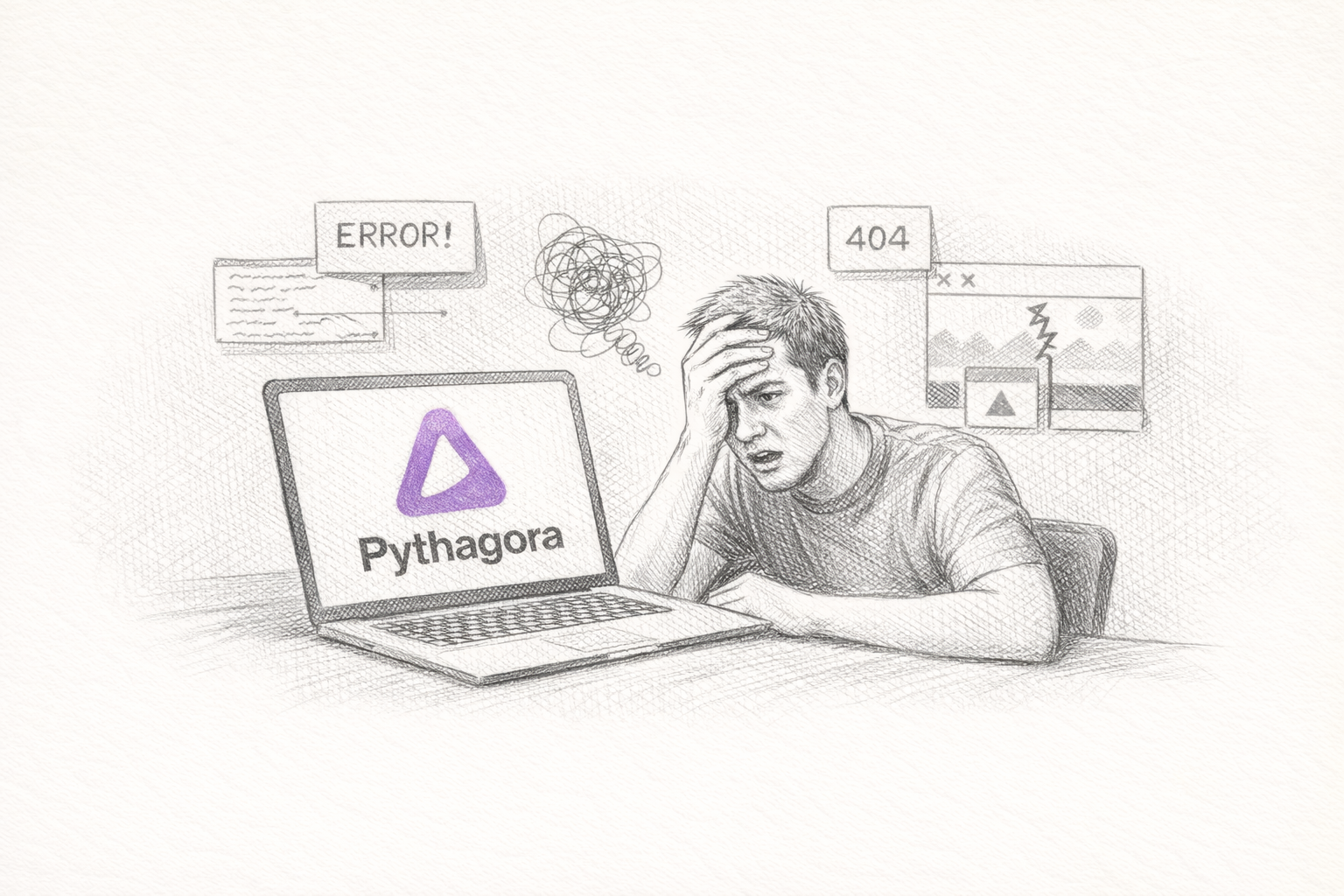
My Frustrating Experience with Pythagora:
A Vibe Code Gone Wrong
I was recently introduced to Pythagora, an AI-powered coding platform, through a demo by Matthew Berman. The promise of "vibe coding" in code steps, what they call "Epics", had me genuinely excited. I was looking to rebuild my photography website, RichGetz.com, and thought this would be an opportunity to try out a structured coding environment and ditch my original plan of using Google IDX with Gemini. (I built this site with Claude, check out the review.)
This AI Coder BUILDS (Pythagora 2.0 Tutorial)
by Matthew Berman
https://www.pythagora.ai
The Promise of Focused Development
One of the features that initially drew me in was what Pythagora calls "Epics." (Sprints in standard developement terms), which would force structured coding practices. I liked the idea that I could see where the tool was in the build cycle and that I could update the requirements and the build would adjust. True Agile! But this is more like Fragile.
I was excited by the concept of working in focused sprints to keep development organized. It's crucial for preventing LLM cross-contamination—where the AI, in fixing one thing, inadvertently changes or breaks something else outside the current scope. By keeping the AI focused on a tight scope of work within a sprint, it should, in theory, prevent these unwanted, and often unnoticed, changes. This would allow me to act as a product owner, providing direction and making decisions when needed. This was the "vibe coding" dream. The coding tool codes and tests and only invokes me for decision making.
The "DumbDumb Dev" Reality
Unfortunately, the dream quickly turned to angry coding. Right out of the gate, the platform lacked any sense of discovery. It never asked for a brand book, a color palette, or fonts, a glaring omission for a tool meant to deliver production-ready apps.
My frustration mounted as it consistently failed to follow instructions. When I gave it a very focused task, like changing a color, it wouldn't just change the color. It would also alter the page layout and rewrite the copy. It even added back elements I had previously told it to remove. Because we were only working on a single page, I caught these unwanted changes easily. But it's a huge problem. In a larger project, such changes could go unnoticed for a long time.
The most persistent issue was with my brand colors. I tried five times to get it to use my specific palette:
It stubbornly stuck to a yellow and blue theme, ignoring my direct CSS input.
Usability Nightmares
Beyond the branding and scope issues, basic usability was lacking. The copy-paste function on their "Specs" page was broken. Even worse, the company's own "Contact" button on their website is non-functional, and the "Contact Support" link in the documentation just loops back to the FAQ page.
The core promise of "vibe coding"; where I could act as a stakeholder and let the AI handle development and testing was completely broken. Instead of making high-level decisions, I was stuck in a frustrating loop of correcting the AI's mistakes.
My expectations of the perfect Vibe Coder is this.
I start with either detailed or loose requirements.
The tool reviews and starts discovery with me, asking questions to fill in gaps, or make clarifications, or on the preferred stack. This could be a short or long discovery.
Then it would create the sprints and begin work.
Unfortunately, AI tools are very good for ‘creating’ something. But that something may not be to your expectations. When you start to delve deeper, or submit change requests, that’s where current LLMs fall apart. I was really hoping a tool like Pythagora would help corral the LM. “Discipline is All You Need”.
After 4 Rounds of Updates
Pythagora refuses to use my styling.


Horrible Styling
Yellow?
Pythagora started with an all yellow site with blue text.
The instructions were retro pencil sketch and for some reason, retro means yellow and blue to Pythagora. Not the worst misinterpretation, if it was able adhere to my brand book, but it would not.

Final Thoughts: Unusable
In short, Pythagora is unusable in its current state. If a tool can't handle a simple color change without going off the rails, it can't be trusted with the complexities of building a full application. The concept is brilliant, but the execution was a masterclass in frustration.
I did not test past this point. I really hope improvements are made because for $89/month, this could be a wonderful tool.